One mark was not enough.
The project needed more than a single logo file. The identity had to work across very different physical and digital applications while remaining recognizable, reproducible, and easy for future vendors to use correctly.
DCD Advisory translated an initial visual direction into a flexible identity system designed to remain consistent across digital channels, racewear, embroidery, print, signage, trailers, merchandise, and production vendors.
The project was approached as a production system, not a one-off logo treatment: every mark needed a clear role, every format needed a purpose, and vendors needed enough guidance to keep the identity consistent after handoff.
The project needed more than a single logo file. The identity had to work across very different physical and digital applications while remaining recognizable, reproducible, and easy for future vendors to use correctly.
DCD built a structured identity system around primary and compact logo configurations, PRG5 abbreviated marks, color and one-color standards, clear-space and minimum-size rules, embroidery guidance, large-format production guidance, and organized multi-format artwork.
The result is a reusable brand system with scalable artwork and clear production rules that can move from a social graphic or embroidered sleeve to racewear, signage, trailers, print, and merchandise without reinventing the identity each time.
The identity was expanded into a set of controlled configurations and production rules so the brand can adapt without becoming inconsistent.
Modernized primary configurations with and without the Gen5 tagline for storytelling, large-scale, and flexible applications.
Wider, space-conscious configurations that preserve the core identity when the primary lockup is not the best fit.
Inline and stacked abbreviated marks created for hats, sleeves, social icons, decals, embroidery, and small-format placements.
Color, one-color, clear-space, minimum-size, and contrast rules designed to protect consistency across applications.
Specific direction for embroidery, racewear, vehicle graphics, signs, banners, wraps, and other large-format production.
Organized SVG, EPS, PDF, PNG, and JPG resources so production partners can use the right file for the right job.
The final guidelines turn the visual direction into a repeatable system that can be understood and used by designers, apparel vendors, embroidery shops, printers, and large-format production partners.
The visual language establishes the overall Petty Racing Gen5 direction and the 'Built for the Next Generation' positioning.
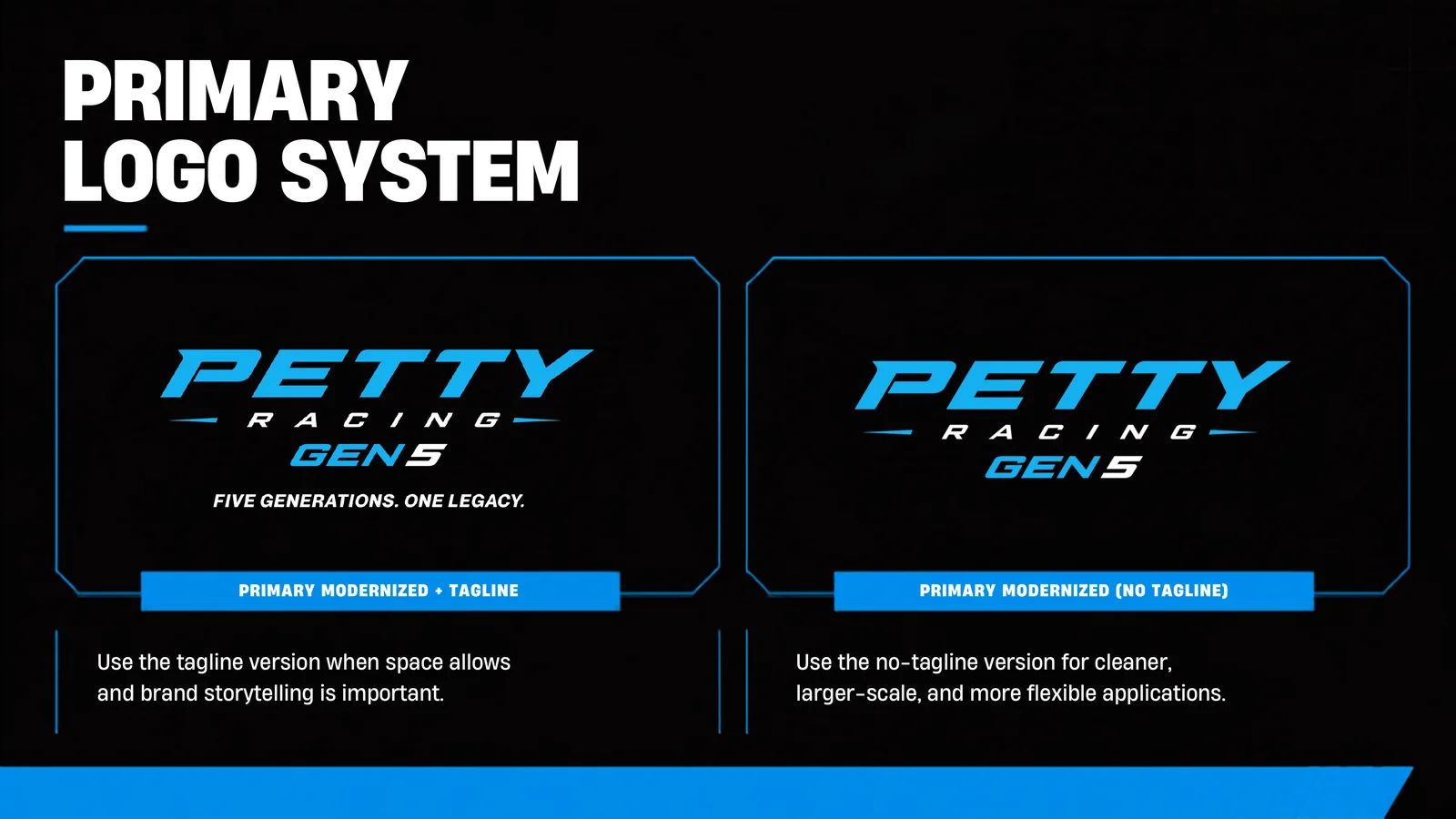
Tagline and no-tagline versions give the identity options for different scales, layouts, and production environments.
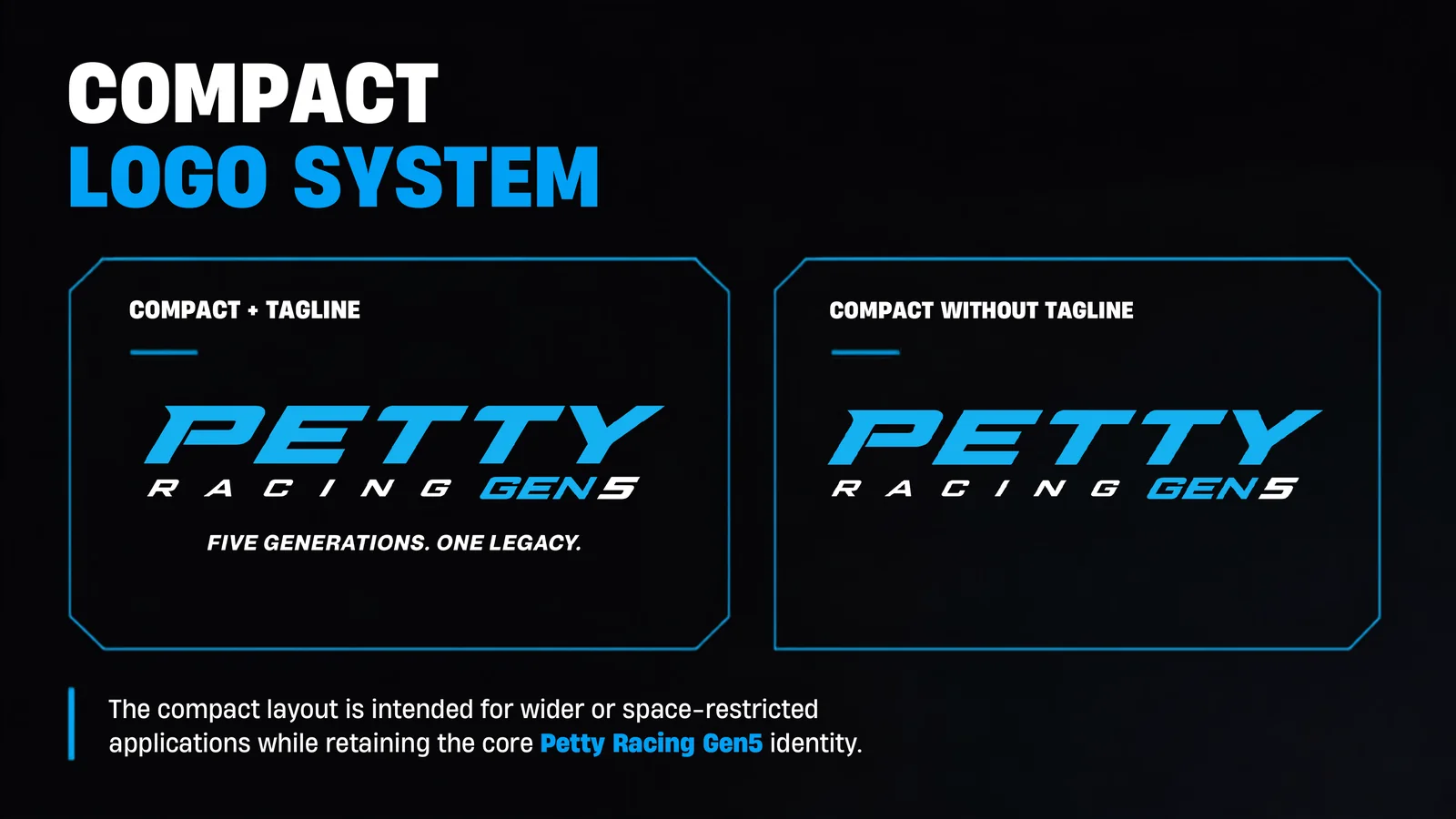
The compact system keeps the same identity intact when a wider or more condensed footprint is required.
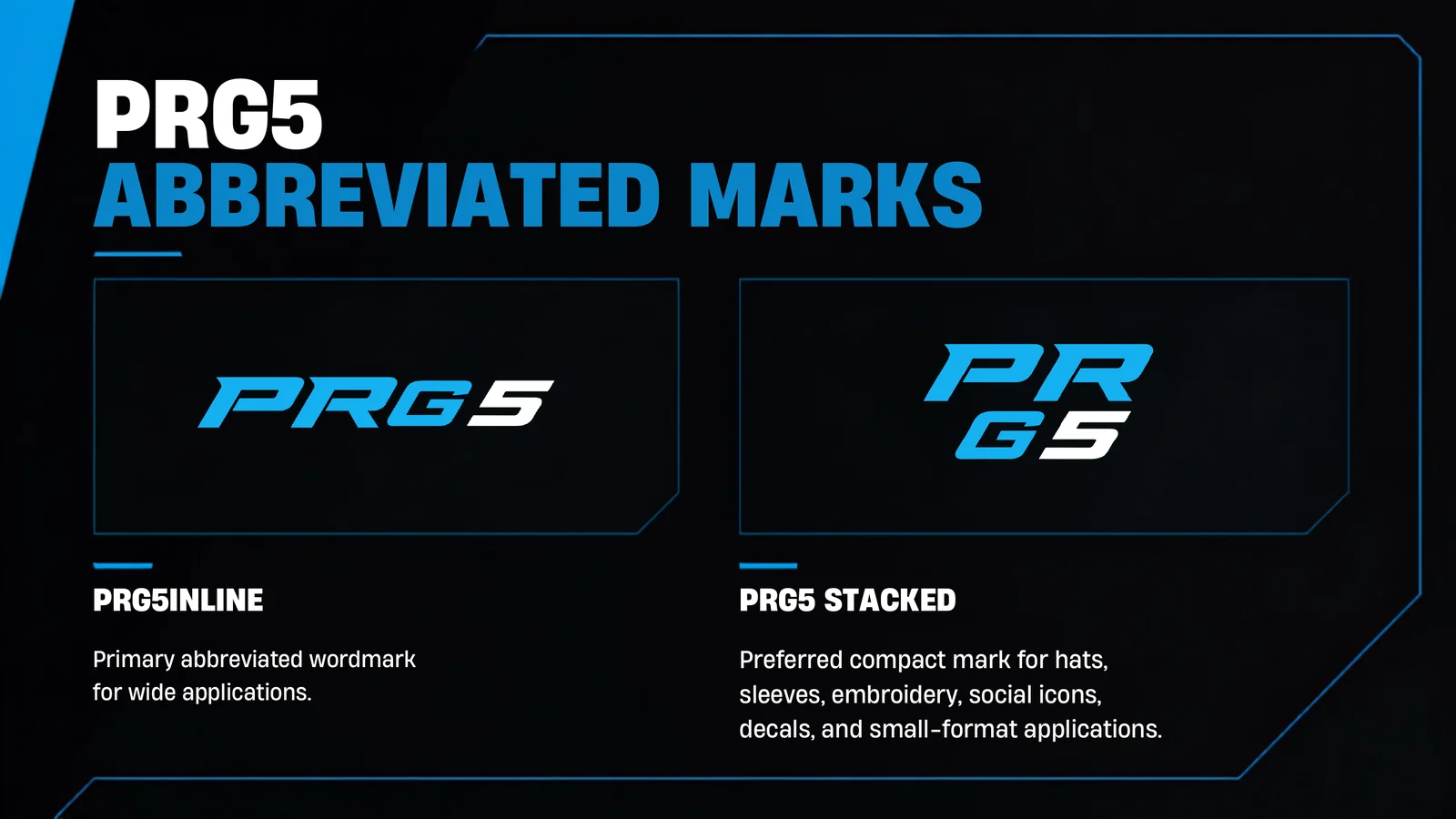
Inline and stacked abbreviated marks extend the system into embroidery, sleeves, hats, icons, decals, and other smaller placements.
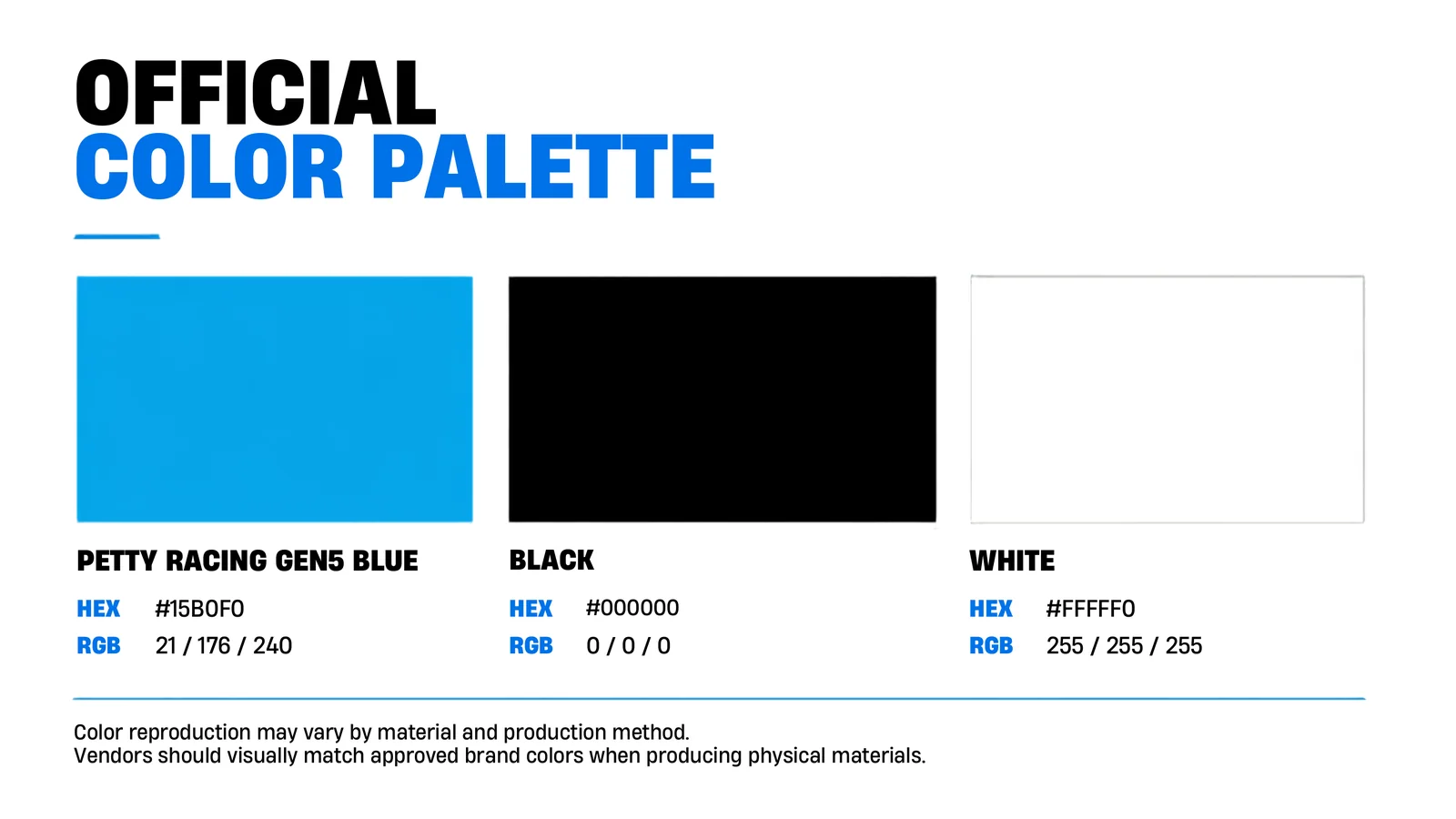
The palette anchors digital and physical applications while leaving clear guidance for vendor color matching.
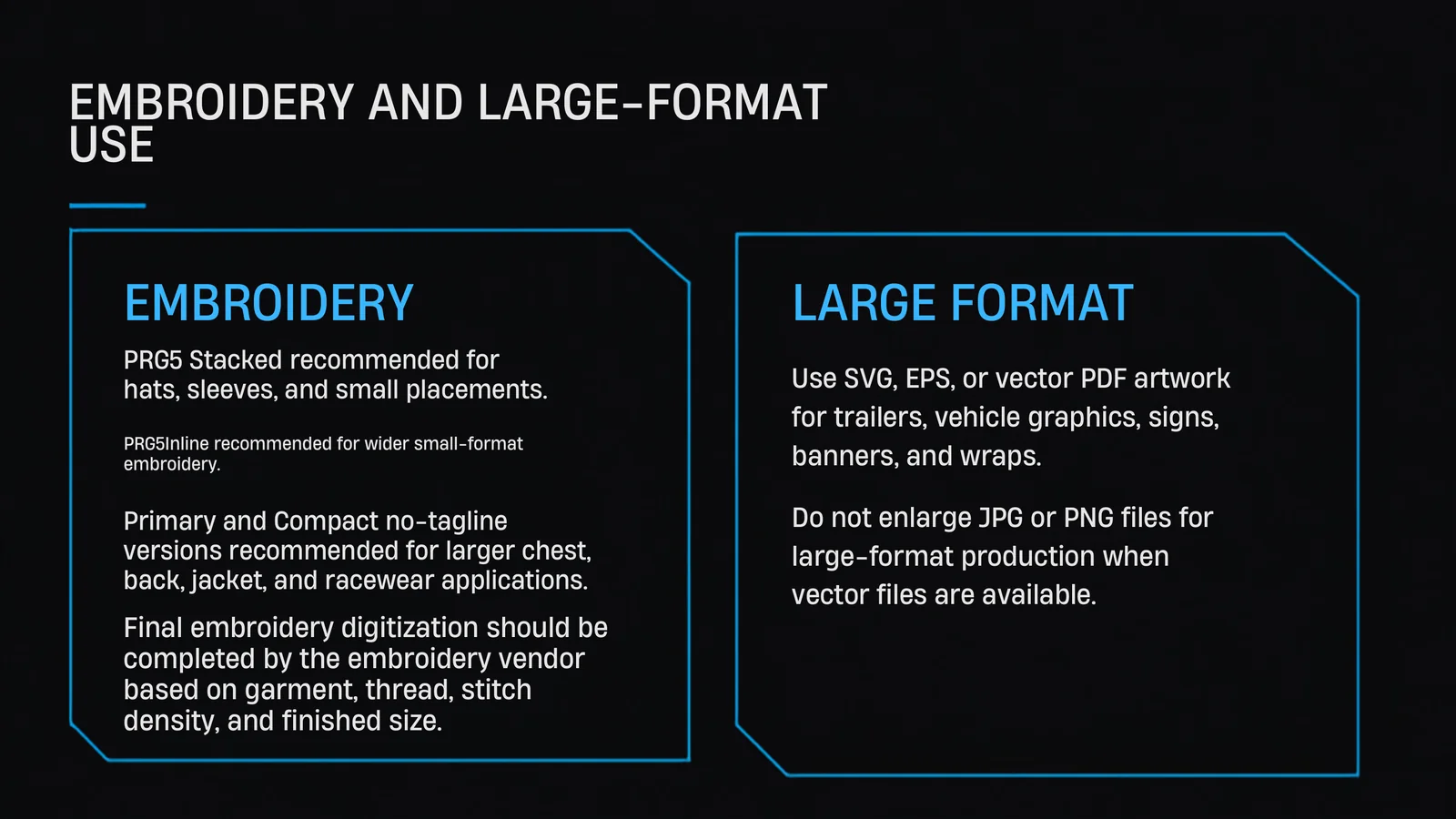
Embroidery and large-format standards help production partners select the right mark and file type for each application.
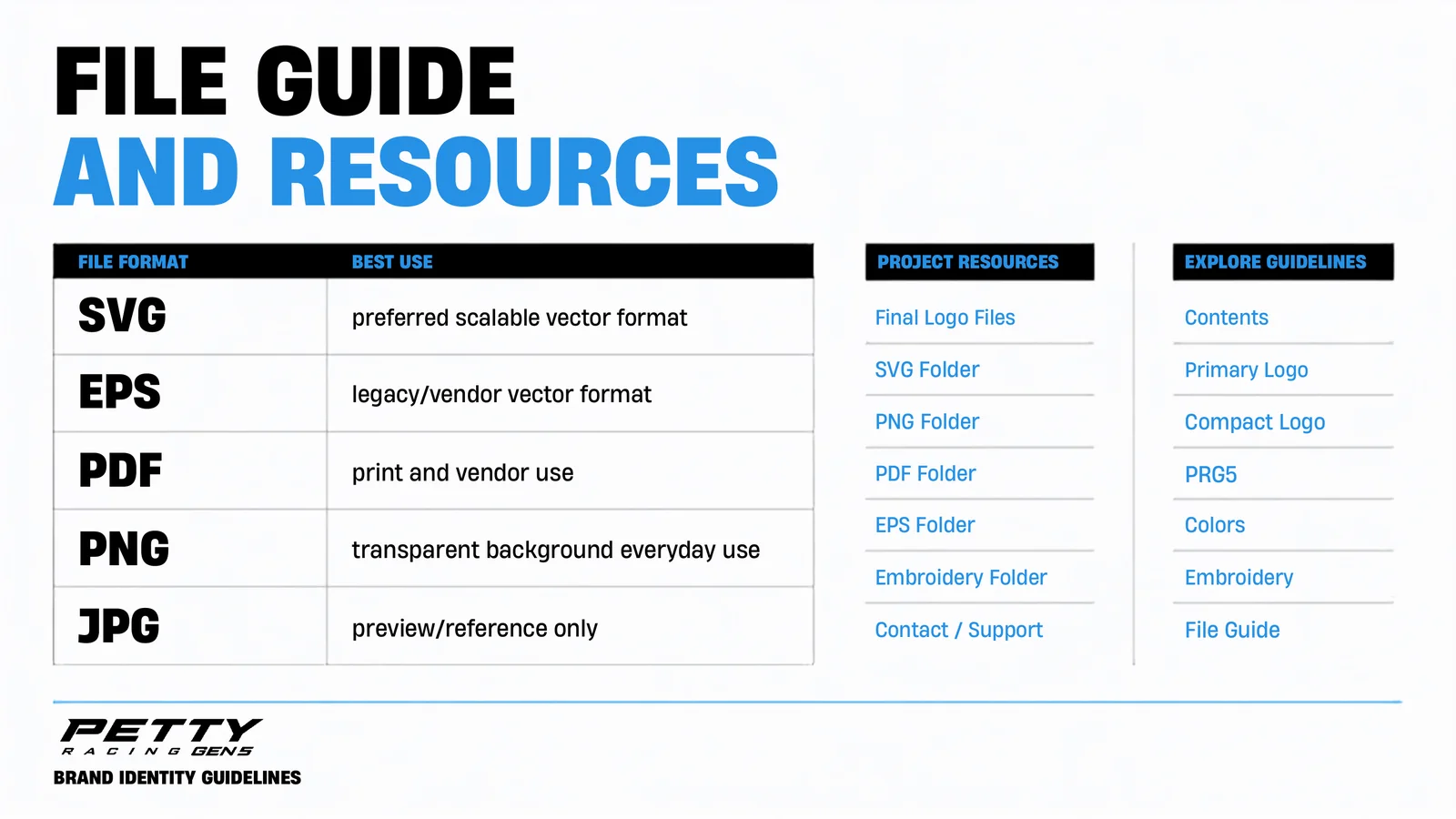
The delivery system explains when to use SVG, EPS, PDF, PNG, and JPG resources and keeps vendor handoff straightforward.
Motorsports identities live on difficult surfaces: garments, sleeves, hats, vehicle graphics, trailers, banners, merchandise, and sponsor-heavy layouts. The system accounts for those environments instead of treating production as an afterthought.
Petty Racing Gen5 demonstrates the DCD approach to brand work: solve the production problem at the same time as the visual problem, then leave the client with a system that can keep working after handoff.
DCD Advisory combines creative and technical capabilities around the actual problem - from identity systems and digital experiences to automation, dashboards, AI tools, and custom operational workflows.
The deliverable changes, but the method stays consistent: understand the problem, design the system, build it properly, and connect the pieces that should work together.